The coffees, explained
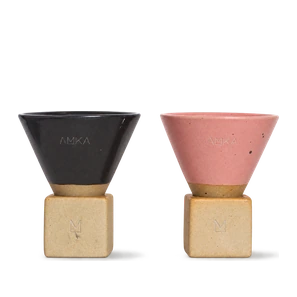
Four coffees, four different cups.
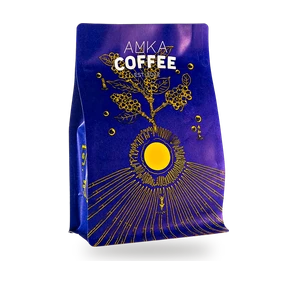
Kenya AA
Citrus, floral and black tea.
Process: Fully washed.
Bag artwork: Awakening symbols.
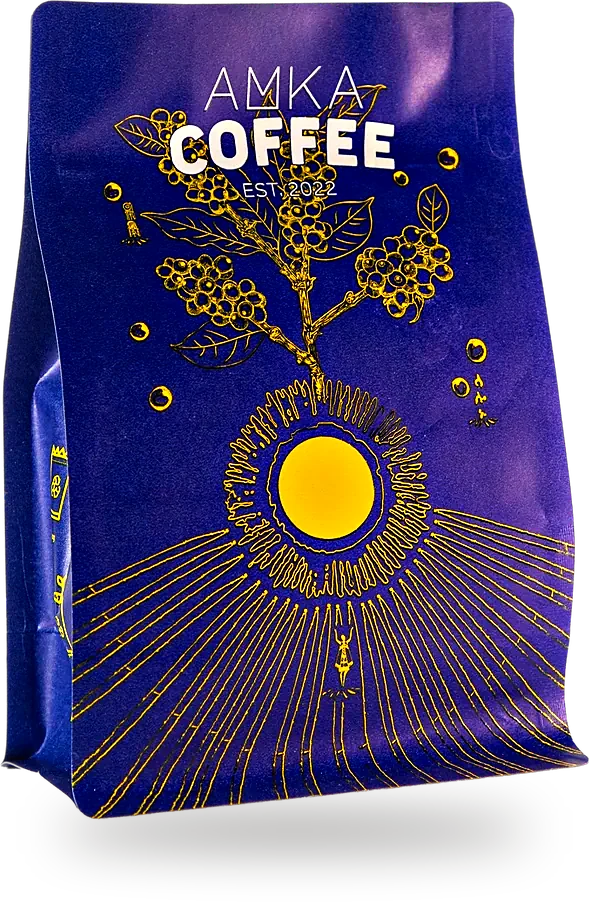
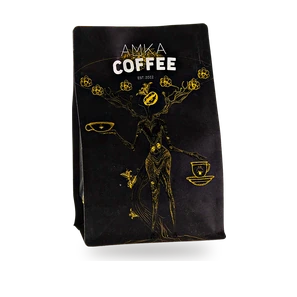
Blend
Chocolate, stewed berries and cola spice. Medium roast.
Bag artwork: Awakening symbols.

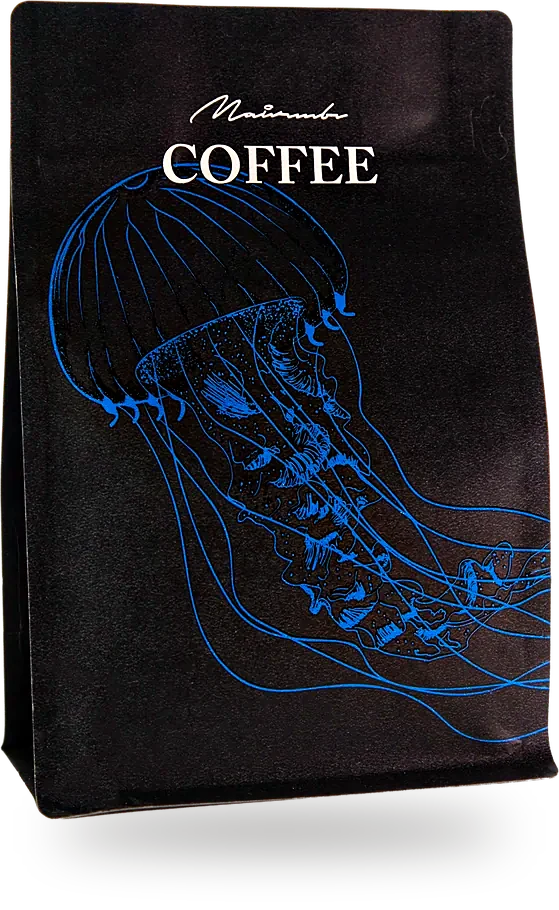
Experimental
Tropical fruit and wine body.
Process: Carbonic maceration, anaerobic fermentation or natural process.
Bag artwork: Awakening symbols.

How We Brew it
For a French press, grind fresh, use water just off the boil and leave it for four minutes before pressing. For a pour-over, grind fresh and pour water just off the boil slowly through the coffee. Start with these simple methods and adjust to taste.
Keeping it Fresh
Best within four weeks of opening. General guidance: keep it sealed, cool and dry, and out of the fridge.
Where Kenyan Coffee Comes From
Background on the country our coffee is grown in. This is how Kenyan coffee works in general, not a claim about any one lot of ours.
The highlands
Kenya's central coffee belt, which includes Nyeri and Kirinyaga, sits broadly between 1,400 and 2,200 metres in deep red volcanic soil, and more than 99 per cent of what grows there is Arabica. The varieties are mostly SL28 and SL34, with K7 and the disease-resistant Ruiru 11 and Batian bred by Kenyan research.
Two harvests
Kenya picks twice a year. Sources put the windows slightly differently, so treat them as typical seasons rather than dates: a main crop around October to December, and a second, smaller one in the middle of the year.
What "fully washed" actually means
In the traditional Kenyan washed method, ripe cherries are picked by hand and go to the wet mill the same day. There they are pulped, graded by density in water, and fermented for one to four days until the parchment feels gritty rather than slippery. Then comes the step Kenya is known for: after the first wash the parchment goes back under clean water for roughly another twelve hours. The coffee is dried on raised beds, from about 55 per cent moisture down to eleven, over roughly two weeks. That second soak is strongly associated with Kenya, though it is used elsewhere in East Africa too, and not every Kenyan coffee is processed this way.
Who grows it
About 70 per cent of Kenya's coffee comes from smallholders organised in cooperatives, the rest from estates. In a 2024 study of growers in Embu and Kirinyaga the average holding was around one acre, with about half of it under coffee. At the wet mill, cherry from several farms is often combined in one hopper, so a finished cooperative lot can represent many growers rather than a single farm.
AA is a size, not a score
The AA on a Kenyan bag is a bean grade: beans retained by a screen of about 7.2 millimetres. It describes size, not quality. What the coffee tastes like comes down to picking, processing, drying, storage and how it cups, none of which the grade measures.
Sources: International Coffee Organization, Coffee Profile: Kenya (2019); Food and Agriculture Organization, post-harvest handling (2000); Agriculture and Food Authority of Kenya (2024); smallholder study in Embu and Kirinyaga, Advances in Agriculture (2024).